01
Planes of light folding in front of a performer
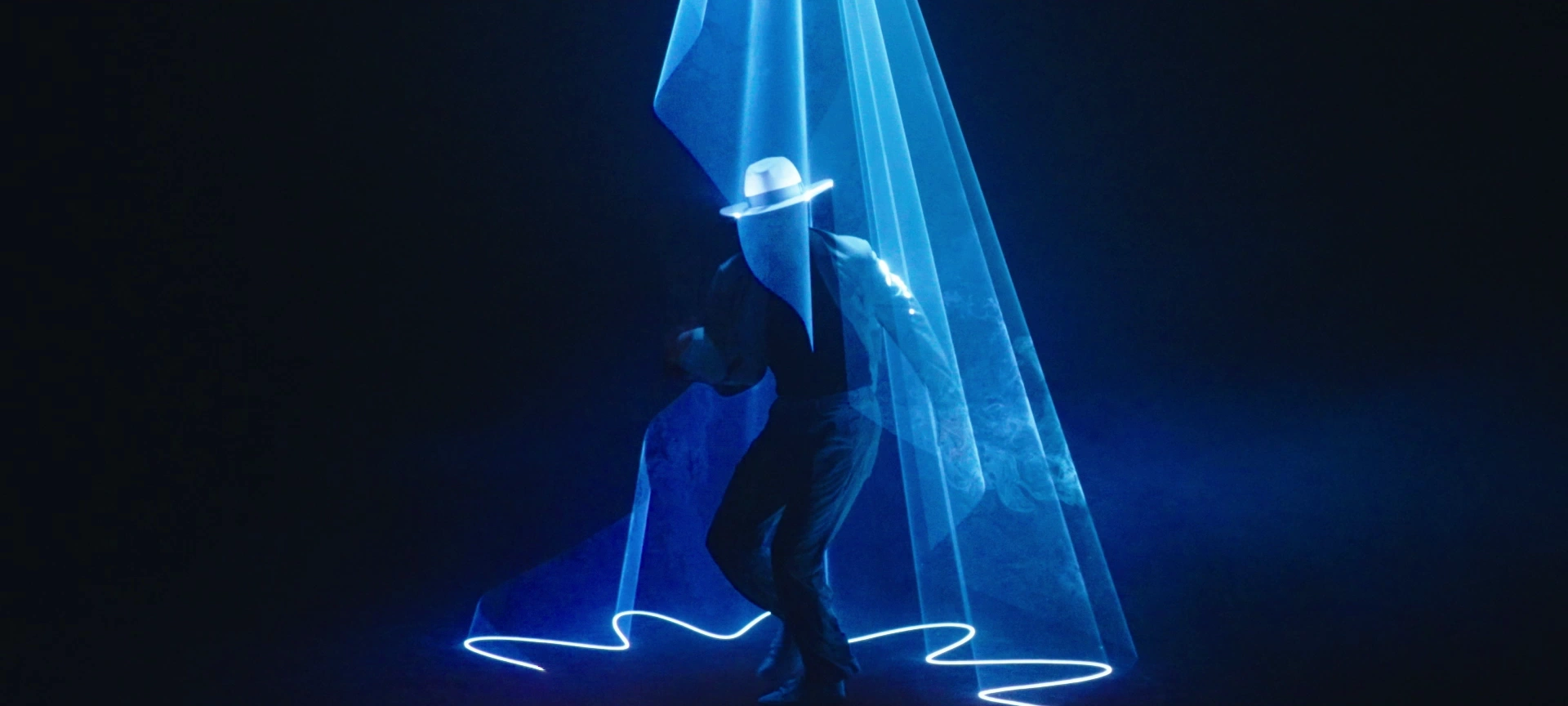
Light descends and overlaps in front of and behind the performer, continuing as waves across the floor. The curved laser planes captured on screen overlap with the body’s movement.
BACON MOVEMENT · WHITE NIGHT
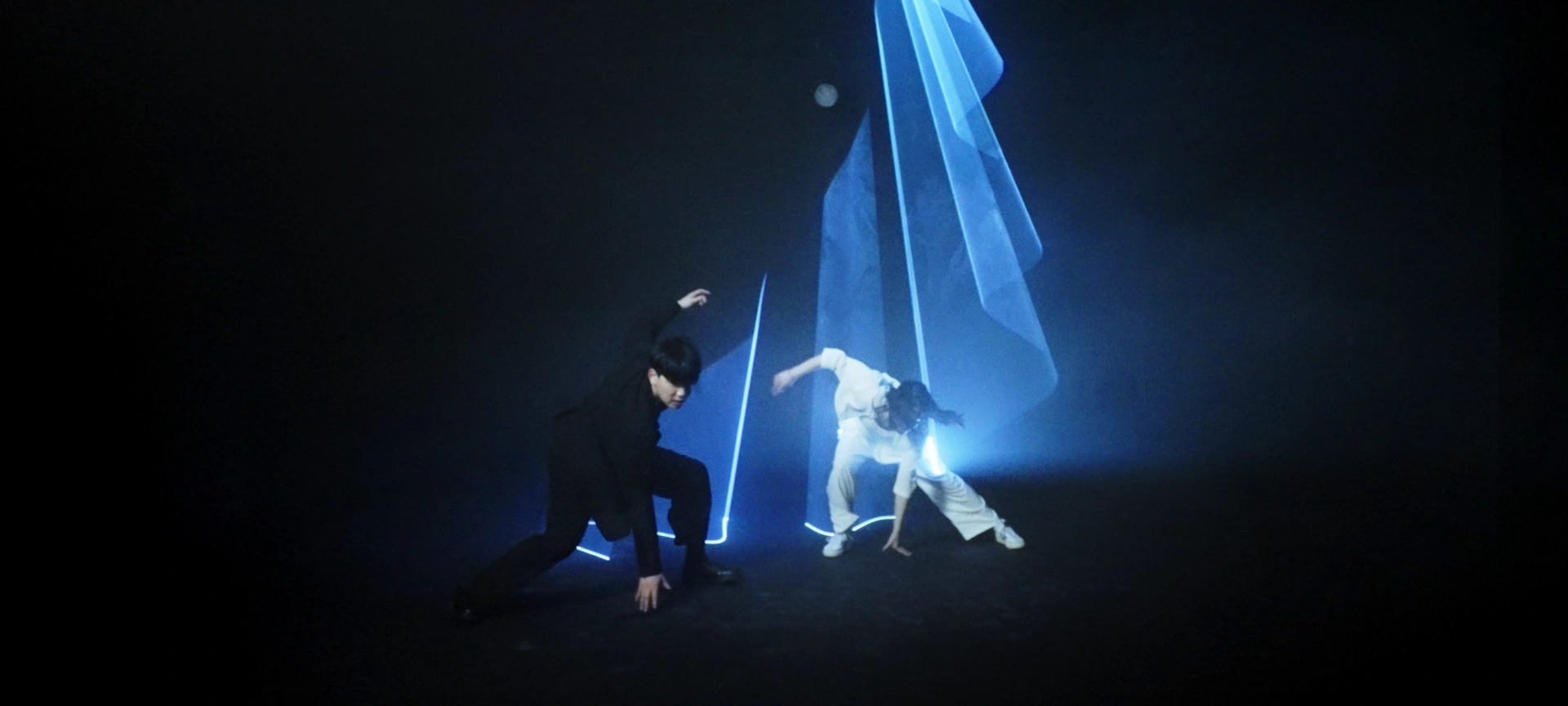
The moment two dancers’ movements expand into a space of light.
We designed the laser forms that appear on camera.
White Night is a roughly two-minute performance film by BACON MOVEMENT. The camera follows two dancers in a dark space before blue lasers transform the scene in the latter part of the film.
KNOVCOMPILE created the visual data for these laser scenes and directed both the projected light and the forms it produced on camera.
We create laser data that defines
the patterns and transitions of light.
Laser scanning projectors cast
light into the space where the performers move.
Changes in data interact with camera settings
to shape the light recorded on screen.
Laser banding is the effect of light appearing curved or divided on camera, depending on changes in the laser data and camera settings. We used these differences as expressive elements within the film.
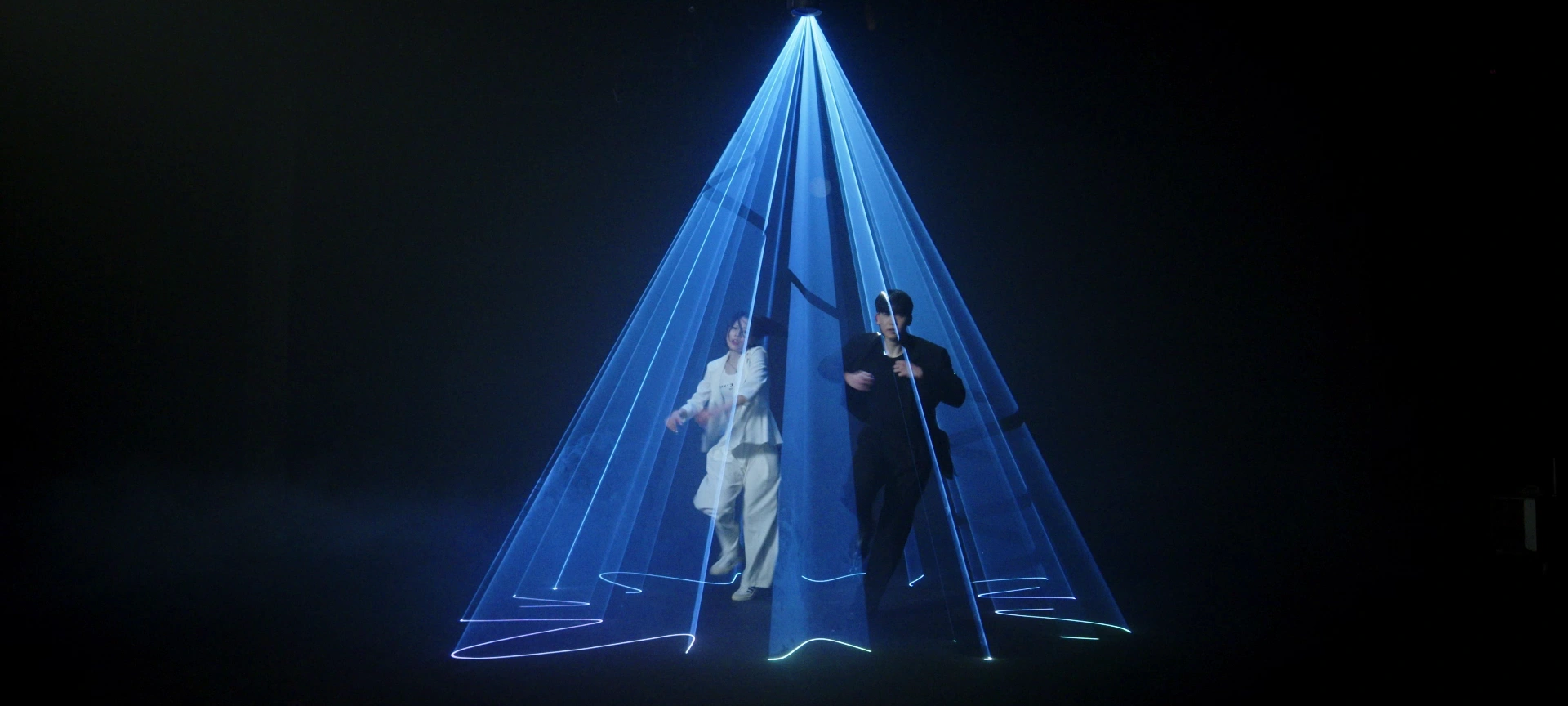
Close to the performers, planes of light fold; in wider shots, they form a space surrounding both dancers. The same laser creates different scenes through framing and the forms captured on camera.
The storyboards below were newly drawn to explain the visual treatment in the finished film.
Light descends and overlaps in front of and behind the performer, continuing as waves across the floor. The curved laser planes captured on screen overlap with the body’s movement.
Wider shots reveal the full outline of the light, from its apex to the curves on the floor. Both performers move within it, with the lasers defining the scene’s space.
The laser sequence from the latter part of the finished film. Use the timeline below to view moments when the light planes and floor curves change.
Watch the full progression from the two performers’ dance into the laser scenes.